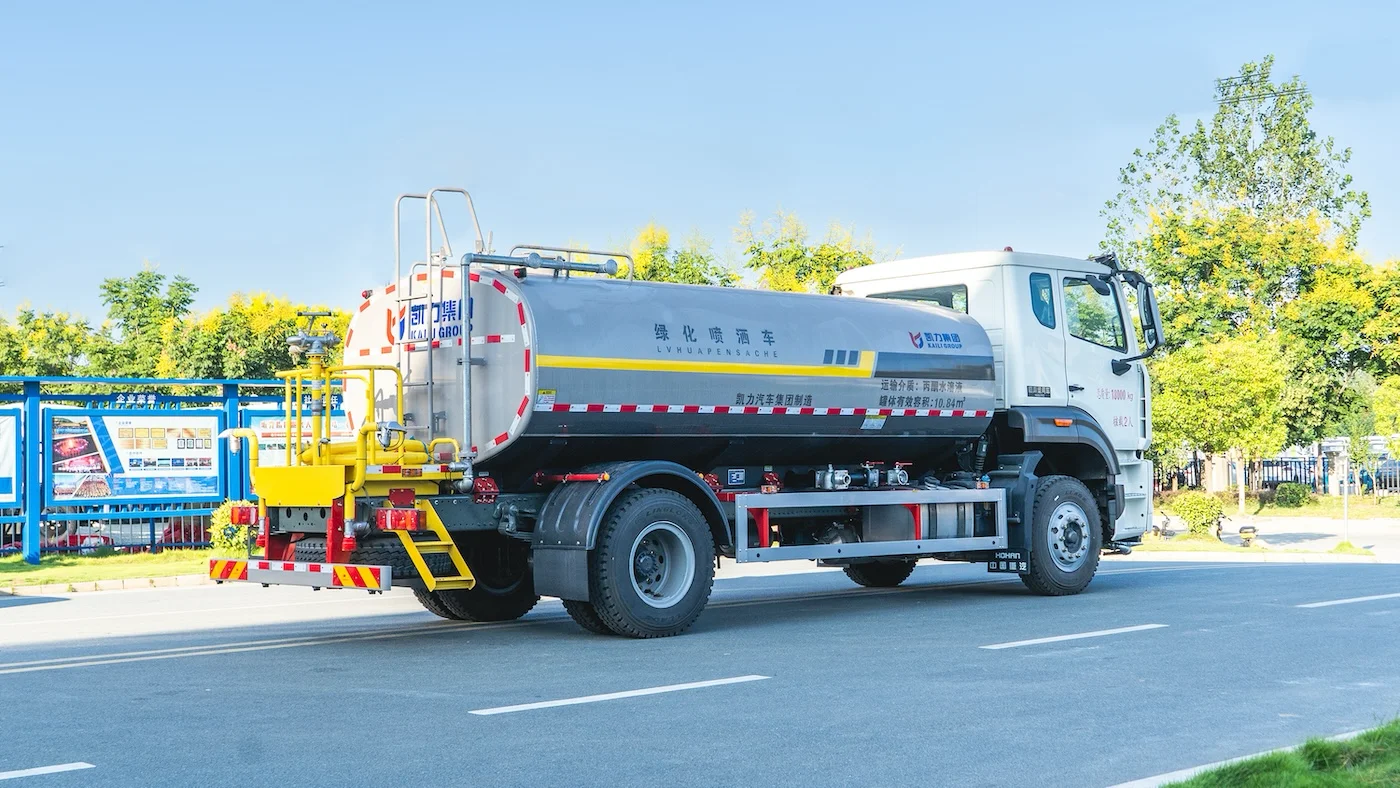
Water trucks serve city cleaning teams, landscape crews, and construction sites. They carry water in a tank and use a pump, pipes, and spray nozzles to deliver it where needed.
Water trucks serve city cleaning teams, landscape crews, and construction sites. They carry water in a tank and use a pump, pipes, and spray nozzles to deliver it where needed.
With different spray settings, water lorries can clean roads, water plants, and control dust. Some models also have fire hose connections to supply water during emergencies.
How Does a Water Truck Work?
Most water trucks use a power take-off (PTO) to draw power from the truck’s transmission and drive the water pump.
The pump draws water from the tank and sends it through the pipes under pressure. Valves direct the flow to front jets, rear spray bars, side nozzles, or a raised water cannon.
Operators can select the outlets and adjust the water flow, pressure, and spray direction. Road cleaning needs a focused stream, while watering plants requires a gentler spray to protect roots and leaves.
Road Washing and Cleaning
Road cleaning is one of the most common water truck uses. Front jets direct water onto the road to wash away dust, mud, sand, leaves, and other loose debris.
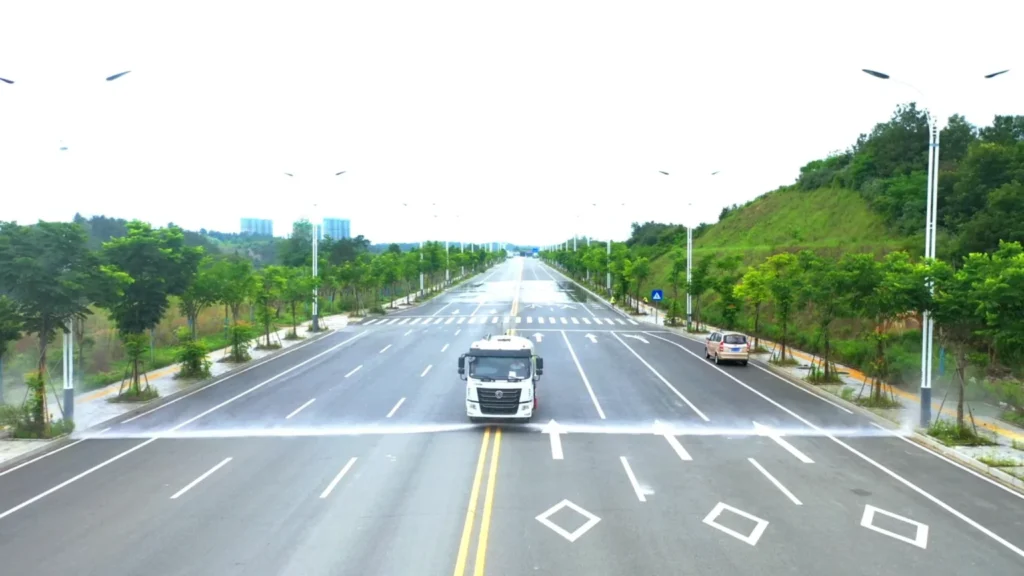
Vehicles often carry dirt onto main roads, industrial access roads, and mine entrances. Water trucks can work alongside road sweepers, moving loose dirt to areas where crews can collect it.
Rear spray bars cover a wider area and wet the road evenly. They also support light washing and short-term surface cooling in summer. Operators should adjust the water flow to suit road conditions and avoid standing water.
Landscape Watering and Plant Care
Water trucks can water roadside trees, park lawns, and other green spaces, especially in areas without fixed watering systems.
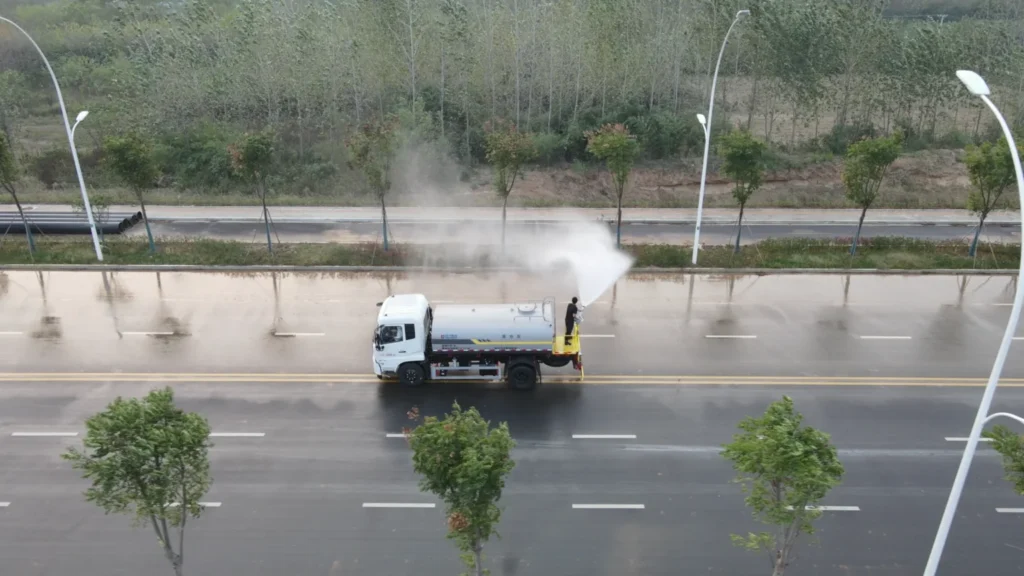
Side nozzles can water planting strips near the road. A raised water cannon can reach plants farther away or on higher ground. Operators can adjust its angle and spray pattern to suit the area.
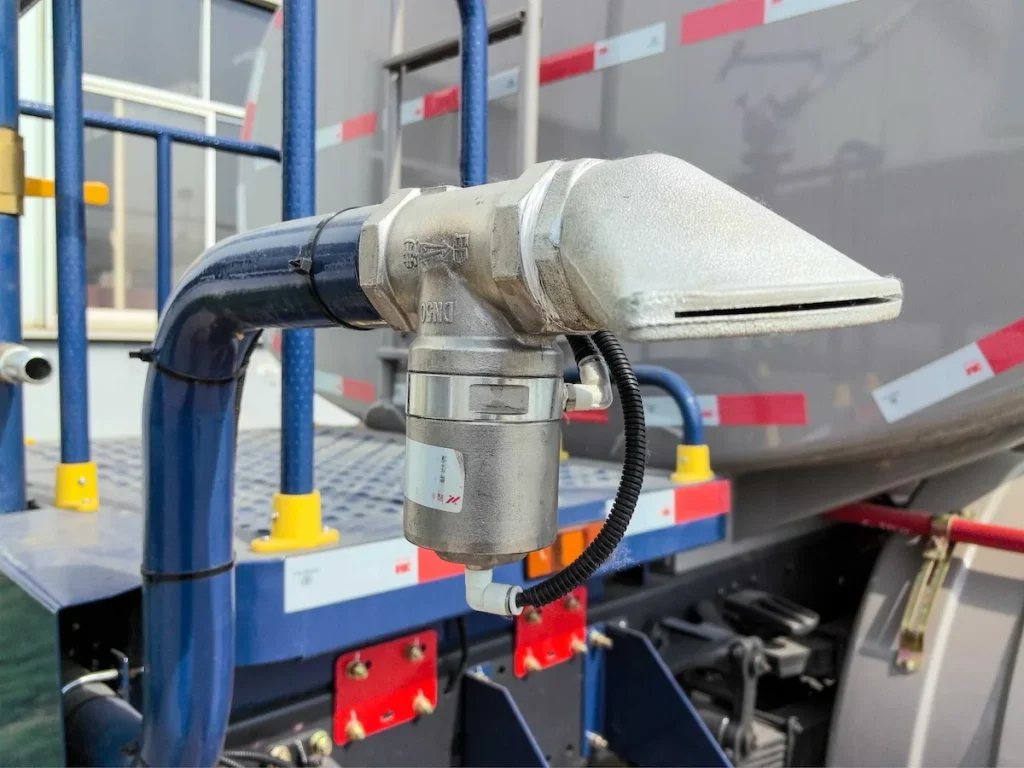
Water pressure and flow should match the plants and soil. Seedlings and flowers need a gentle spray. Strong jets can damage roots, stems, and leaves.
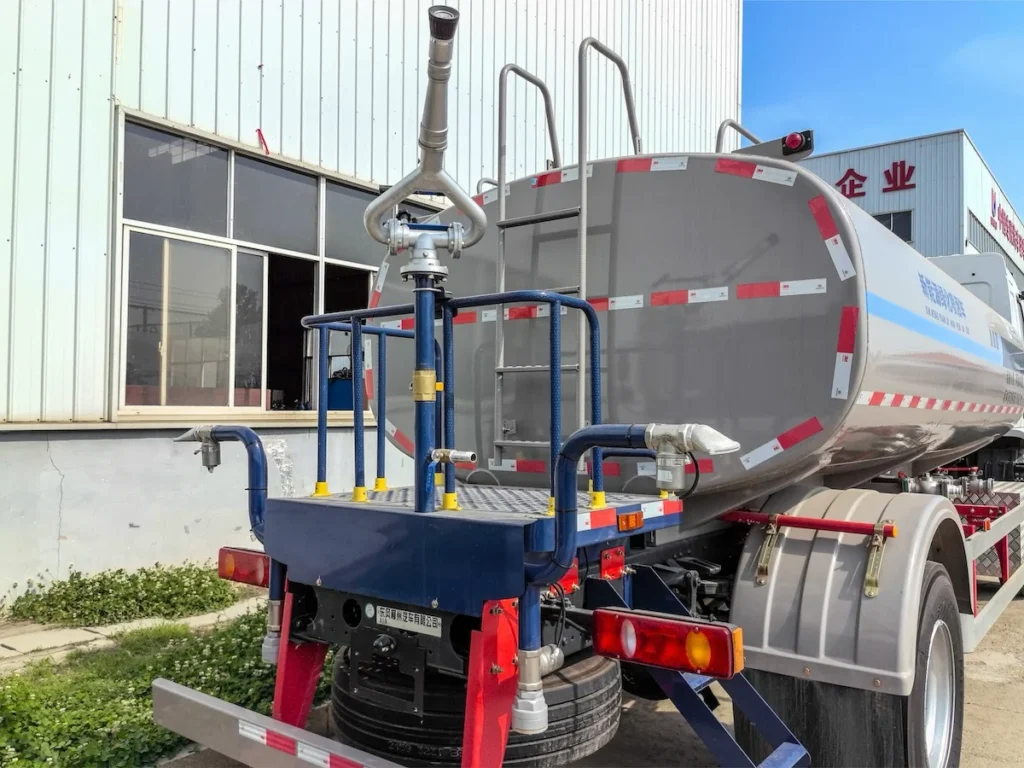
Models with a dedicated chemical spray system can also apply landscape treatments. This work requires suitable tanks, pipes, and spray equipment. A standard watering system alone may not be suitable.
Dust Control and Short-Term Cooling
Vehicle traffic and material handling create dust at construction sites, mines, and sand or gravel yards. Water trucks wet the ground to reduce the dust that passing vehicles lift into the air.
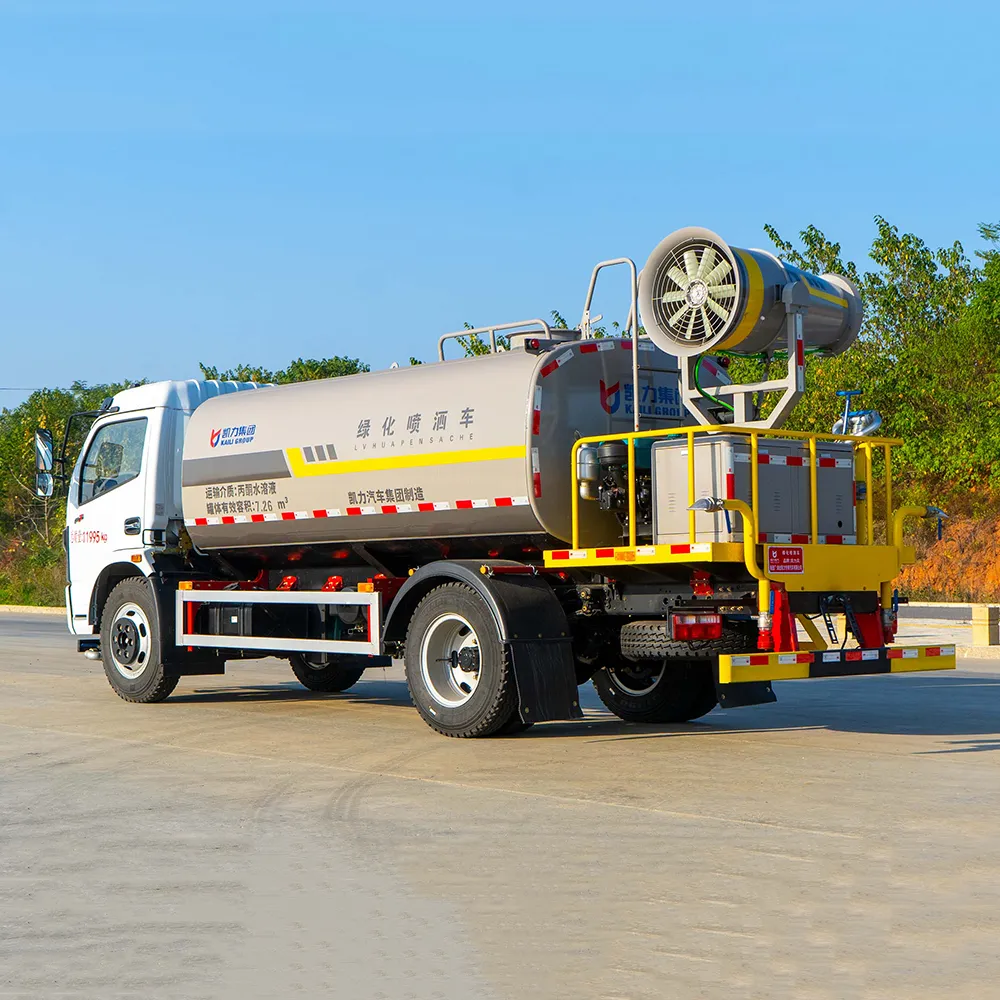
A heavy-duty water truck can support regular dust control on rough site roads. Models with a mist cannon can also spray fine water droplets into the air. These droplets wet some airborne dust particles, allowing them to settle.
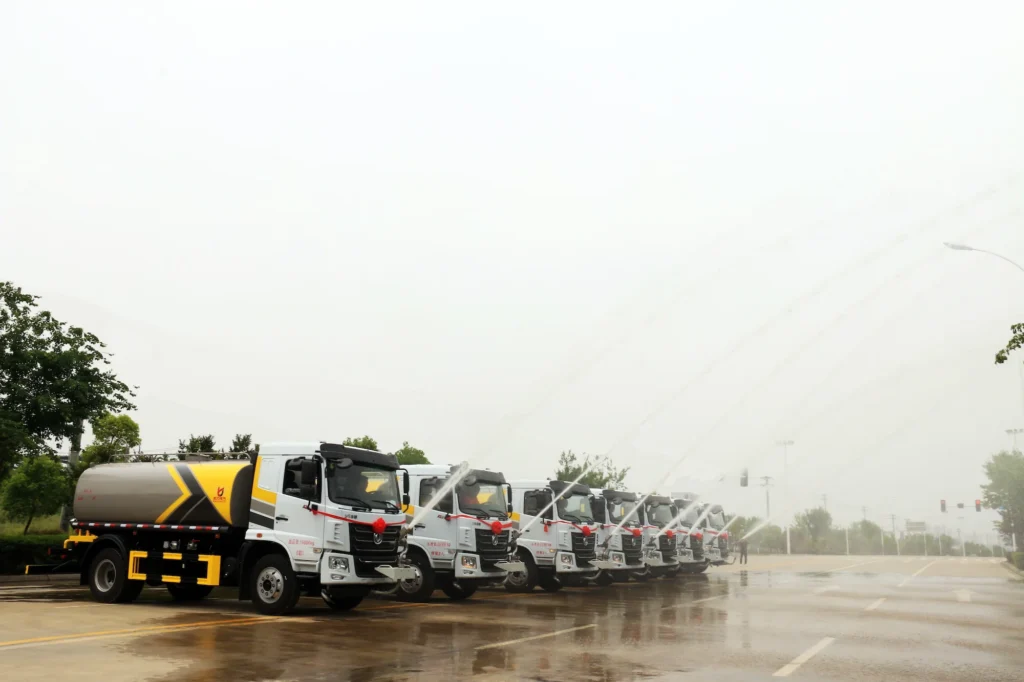
Ground spraying and mist cannons serve different needs:
- Ground spraying reduces dust from roads and other surfaces.
- Dust control cannon target airborne dust around work areas.
Results depend on wind, humidity, dust type, and spray distance.
Emergency Water Supply and Fire Support
Some water trucks have fire hose connections or water cannons. They can transport water to an emergency site and support firefighting crews. KAILIION water lorries can be fitted with dedicated fire couplings according to your requirements.
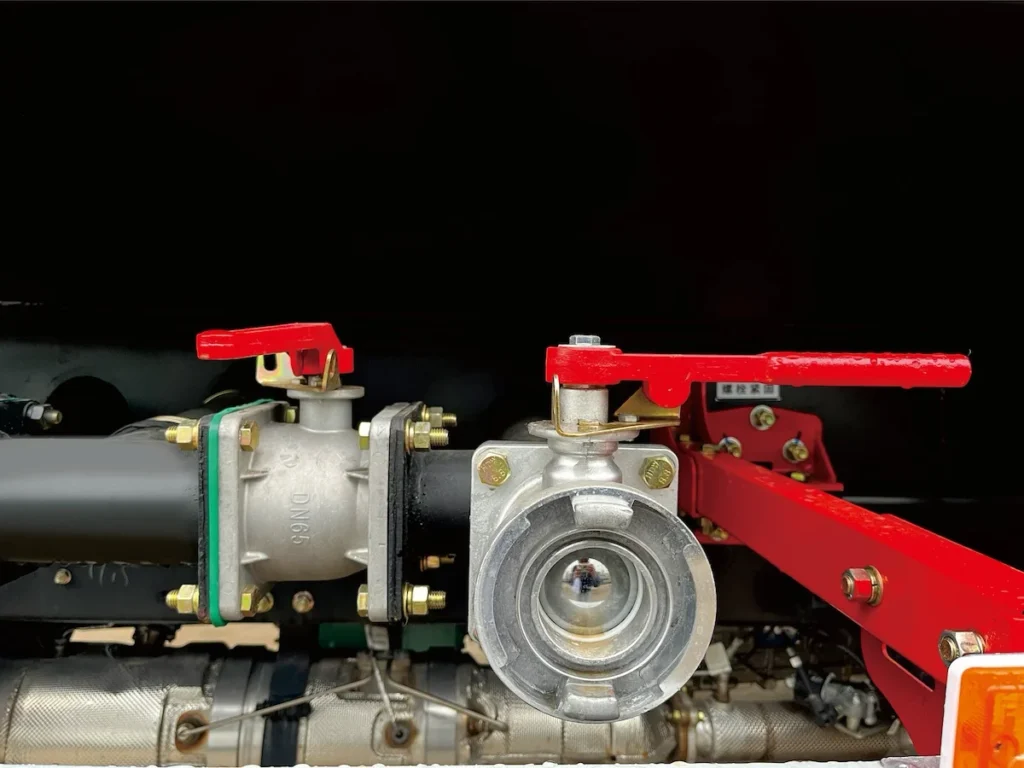
Factories, small towns, and temporary work sites may keep these vehicles as backup water sources. Their support capacity depends on tank size, pump output, and hose connections.
A standard water truck cannot replace a purpose-built fire truck.
High-Pressure Cleaning
KAILION water trucks can be fitted with an optional high-pressure water gun, delivering 7–12 MPa of pressure and a flow rate of 25–50 L/min. It is suitable for washing factory equipment and removing stubborn dirt from walls and floors. A long hose provides a working reach of 20–30 meters, while interchangeable nozzles offer different spray patterns, including jet and fan spray.
How to Choose a Water Truck for Your Work
Start with the truck’s main task, then compare the equipment:
| Main Task | What to Check |
|---|---|
| Road cleaning | Spray pressure, spray width, and nozzle layout |
| Landscape watering | Flow control, water cannon angle |
| Dust control | Ground coverage, dust control cannon range |
| Emergency water supply | Pump flow rate, fire couplings, and related equipment |
Tank size should also match local refill conditions. A big water truck can carry more water and reduce refill trips, but it also adds weight.
Conclusion
A water truck’s uses depend on its pump, pipes, and spray equipment. Choose a setup that matches your main task, whether you need road cleaning, plant watering, or dust control. The right equipment balances work quality, water use, and daily running costs.
Need a Water Truck?
Tell us your needs. We’ll help you choose the right truck.
Related Articles
View All Articles
5 Key Factors to Check Before Buying a Water Truck
A water truck is a common vehicle used for road cleaning, dust control, landscaping, and municipal sanitation work. Buying the right water truck requires careful comparison of both technical specifications and commercial terms.

Understanding the Mechanics of Dust Cannons
A dust cannon uses fine water mist to control airborne dust. The water droplets mix with dust particles, making them heavier so they settle to the ground.
Water Truck Parts, Structure, Functions, Operation and Maintenance Guide
A water truck is made up of several key systems. Each system has a different role in water transport, pumping, spraying, and vehicle operation.