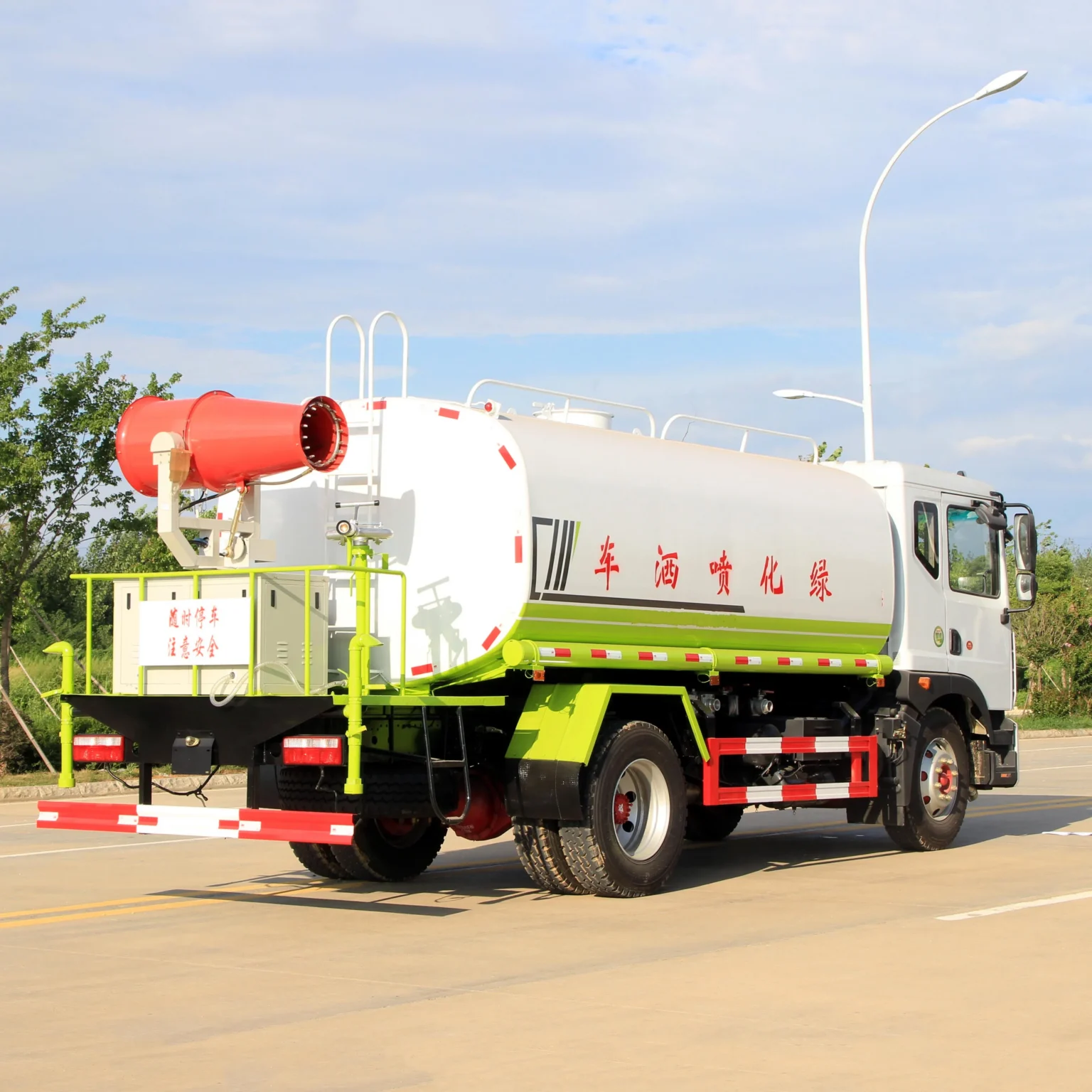
A dust cannon uses fine water mist to control airborne dust. The water droplets mix with dust particles, making them heavier so they settle to the ground.
A dust cannon uses fine water mist to control airborne dust. The water droplets mix with dust particles, making them heavier so they settle to the ground.
A dust cannon helps reduce dust, improve visibility, and keep work areas cleaner. It is useful at construction sites, mining areas, and material handling facilities where dust comes from moving, crushing, or dumping materials.
For the best results, choose the right mist size, spray direction, and operating position for each dust source. This approach helps control dust without using more water than needed.
How does a dust cannon work?
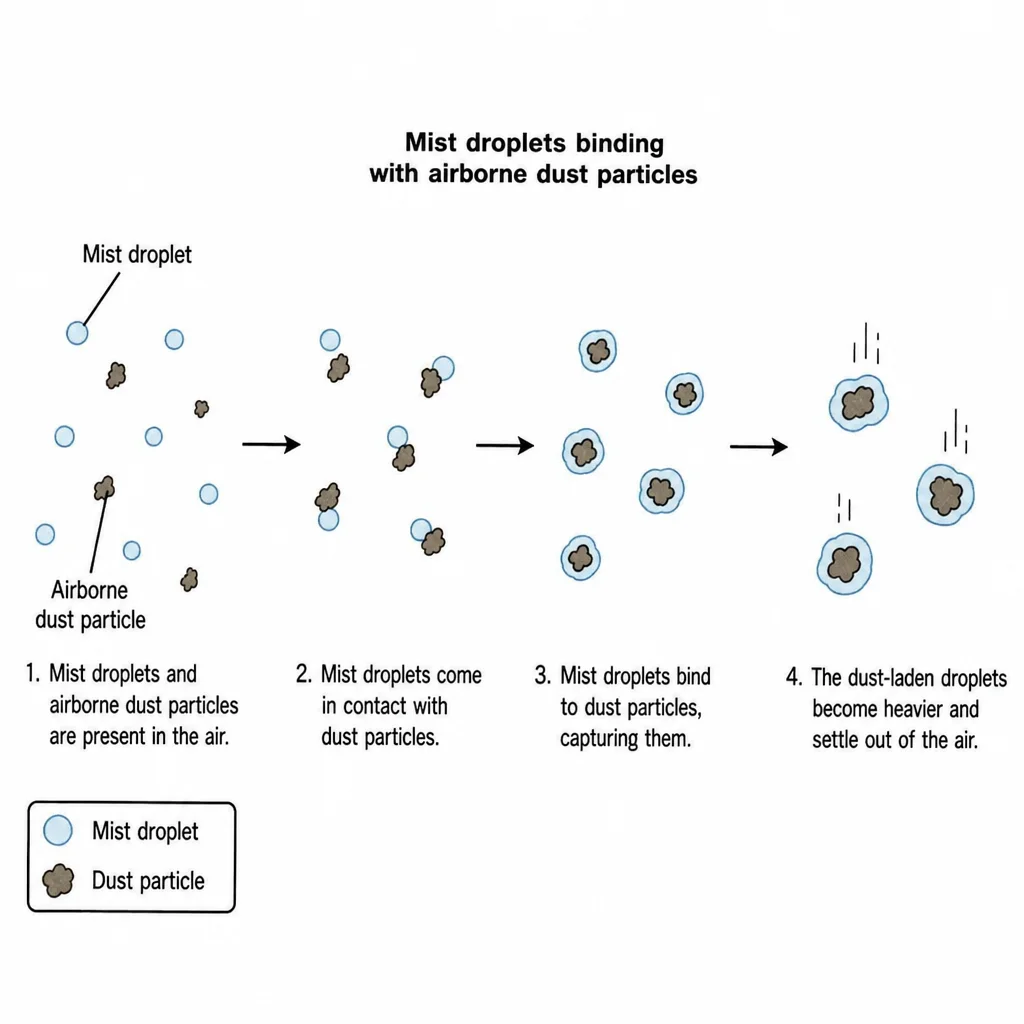
A dust cannon works by combining high-volume airflow with atomized water droplets. A fan projects mist through the air toward a dust plume, while nozzles break water into small droplets that collide with airborne dust particles. Once dust binds with the moisture, it gains weight and drops to the ground rather than drifting across the site.
The basic idea is simple, but the mechanics matter. If the droplets are too large, they may pass through the dust cloud, wet the ground, or push dust aside without capturing it effectively. If droplets are too small, they can evaporate quickly or fail to carry enough mass in hot, dry, or windy conditions. Many dust suppression cannons create fine droplets over a wide range.
This range is often 10 to 100 microns.
The mist can mix with dust without flooding the work area.
Inside the machine, three functions work together:
- Air movement: A fan sends mist over distance and helps it reach the active dust source.
- Water atomization: Nozzles turn water into a fine spray pattern instead of a heavy stream.
- Directional control: Rotation, tilt, and adjustable flow let operators aim the mist where dust is being generated.
That combination makes the dust cannon useful for dynamic environments. Dust comes from many sources, including conveyors, crushers, haul roads, loading points, stockpiles, demolition sites, and wind-exposed areas. A cannon gives operators a way to reach the moving plume while limiting unnecessary water use.
KAILION has extensive experience in dust control, you can explore our dust control solutions.
The science behind mist and airborne dust
Effective dust suppression depends on contact between water droplets and dust particles. When the mist is the right size and spread evenly, droplets stick to particles or add moisture that helps them clump together. In practical terms, tiny particles clump together, become heavier, and settle faster.
Particle size is important because not all dust behaves the same way. Larger visible dust may settle quickly on its own, while finer dust can stay suspended and travel farther. Inhalable dust can include particles below 100 microns, while smaller fractions may reach deeper parts of the respiratory system.
This is why dust control is not only about keeping a site looking clean. It can also support worker comfort, clear visibility, equipment protection, and environmental responsibility.
The goal is balance. Heavy watering may look forceful, but it can create mud, runoff, slippery surfaces, blocked drains, and material handling problems. By contrast, designers create fine mist to meet dust in the air before it spreads widely. That is what separates a purpose-built dust suppression cannon from a basic hose or sprinkler.
Main components that shape performance
A dust cannon’s performance is the result of several components working as one system.
Fan and airflow design
The fan gives the mist reach and direction. A stronger airflow can carry droplets farther, but distance alone does not guarantee better dust control. If the airflow is poorly matched to the site, it can overshoot the plume, disturb settled material, or lose effectiveness in crosswinds.
A well-set cannon aims the mist into the path of the dust, not randomly over the work zone. Operators often need to adjust angle, height, and rotation as the source changes. For example, a cannon for a fixed conveyor transfer point may run in one steady direction.
A cannon used during demolition may need to be moved more often.
Nozzle selection and spray pattern
Nozzles are central to atomization. They influence droplet size, spray shape, water flow, and the evenness of coverage. A clogged or worn nozzle can cause uneven mist, larger droplets, or gaps in the spray cone. This can reduce capture efficiency.
Spray distribution matters because dust clouds are rarely uniform. A narrow jet may miss much of the plume, while an overly broad pattern may dilute the mist before it reaches the dust. The best setup gives enough coverage to surround or reach the dust without wasting water on areas that need no treatment.
Pump pressure and water flow
Water pressure and flow rate help determine how the mist forms. Too little water may leave dust untreated, while too much water can create mess and operational friction. Adjustable flow is valuable because dust levels change with material type, weather, machine speed, and work activity.
For instance, dry crushed aggregate may need a different setting than damp soil or mixed construction waste. A site that adjusts the cannon as conditions change usually gets better dust control.
It works better than leaving each setting fixed all day.
What affects dust suppression results?
Dust suppression results depend on the dust source, particle characteristics, environment, machine setup, and operator discipline. A dust cannon is most effective when it is placed close enough to intercept the plume, adjusted for wind and humidity, supplied with clean water, and maintained so the mist remains consistent.
Key factors include:
- Material type: Fine, dry, powdery materials become airborne more easily than heavier or damp materials. Lightweight dust often needs more precise mist coverage.
- Moisture content: Naturally damp material may need only targeted support, while bone-dry material can produce continuous airborne dust during handling.
- Wind direction: Wind can carry mist away from the plume or spread dust beyond the cannon’s reach. Positioning should account for prevailing conditions.
- Drop height and impact: Dust often spikes where material falls, hits a surface, or transfers between machines. These points deserve focused control.
- Distance from source: The farther the cannon is from the dust, the more the spray pattern can disperse before it reaches the target.
- Water quality: Sediment or impurities may clog nozzles and reduce atomization quality.
- Maintenance habits: Clean filters, nozzles, pumps, and fans preserve performance and reduce downtime.
A common mistake is placing the cannon where it is convenient rather than where it can intercept dust effectively. Another is using high water volume to compensate for poor aiming. Better dust control usually comes from thoughtful placement and droplet management, not simply from more water.
Where dust cannons are commonly used
Dust cannons are used wherever airborne particles create safety, environmental, or operational challenges. Their mobility and adjustable throw make them especially helpful in open or semi-open areas where enclosures are difficult.
Common applications include:
- Demolition sites: Controlling dust from breaking, crushing, and loading debris.
- Quarries and mining operations: Managing dust around crushers, screens, haul roads, and stockpiles.
- Recycling facilities: Reducing airborne particles from sorting, shredding, and material transfer.
- Bulk material handling: Supporting dust removal at conveyor transfer points, loading bays, ports, and storage yards.
- Waste processing and remediation: Suppressing dust when contaminated or mixed materials are disturbed.
- Composting and organics handling: Helping control dust and, in some cases, supporting odor management when paired with suitable systems.
- Industrial yards: Managing dust around slag, scrap, aggregates, or other loose materials.
In many of these settings, dust mitigation has practical value beyond compliance. Less airborne dust can mean better visibility for drivers and equipment operators, reduced cleaning demand, lower nuisance impact on neighboring areas, and less abrasive material entering machinery.
Dust cannons compared with other control methods
A dust cannon is only one tool in a broader dust prevention strategy. In some situations, it works best on its own; in others, it supports enclosures, extraction, surface wetting, or process changes.
| Method | Best suited for | Practical limitation |
|---|---|---|
| Dust cannon | Open areas, moving dust plumes, demolition, stockpiles, transfer points | Needs correct positioning, water supply, and wind awareness |
| Sprinklers | Broad surface wetting and stockpile moisture control | Less precise for airborne dust clouds |
| Enclosures | Fixed conveyors, crushers, and indoor process points | Can be costly or impractical for mobile operations |
| Extraction systems | Indoor or contained dust sources | Requires ducting, filtration, and controlled capture points |
| Chemical suppressants | Long-lasting surface stabilization | Must be selected carefully for material, site, and environmental needs |
This comparison shows why dust suppression is usually a system decision. A cannon may be ideal for a crusher discharge or demolition face, while a covered conveyor, road watering plan, or enclosure may handle other sources better. The strongest dust control plans often combine methods so each dust source is treated in the most practical way.
Practical setup tips for better dust control
Good setup turns a dust cannon from a water-spraying machine into a focused dust control tool. Before you start, observe where dust forms, how it moves, and when it peaks. Then adjust the cannon to meet the plume rather than chasing it after it has spread.
Use this quick setup checklist:
- Locate the source first: Aim at the generation point or the early plume, not just the visible haze downwind.
- Match height and angle: The mist should intersect the dust cloud, not skim under it or pass above it.
- Watch wind movement: Reposition as wind changes, especially on open sites.
- Start with controlled water flow: Increase only when the mist is not capturing enough dust.
- Check for over-wetting: Mud, runoff, pooling, or slippery ground can indicate poor balance.
- Inspect nozzles daily: Uneven spray often points to clogs, wear, or pressure problems.
- Coordinate with operations: If crushers, loaders, or conveyors change speed, the cannon setting may need to change too.
The most useful habit is observation. If dust escapes above the mist, raise the angle or move the cannon. If the mist falls short, adjust distance or airflow. If the ground becomes saturated while dust remains airborne, droplet distribution or aim may be wrong.
Maintenance and total performance over time
Dust cannon performance can slowly decline.
So, treat maintenance as part of dust suppression, not an afterthought. Nozzles, filters, hoses, pumps, and fan components all affect output quality. A machine may still run while making poor mist, which can cause operators to use more water. This does not fix the real issue.
Routine maintenance should keep water pathways clean. Check for leaks. Confirm stable pressure. Remove buildup from nozzles and filters.
The fan should also be inspected for vibration, debris, and damage. On demanding sites, a simple inspection log can help teams spot recurring problems before they cause downtime.
Durability also depends on how the cannon is used. Rough relocation, dirty water, freezing conditions, corrosive environments, and continuous heavy-duty operation can all shorten component life. Choosing equipment and maintenance routines that match the site conditions helps protect the investment and supports consistent dust removal.
The takeaway
A dust cannon works best when people understand it as an engineered mist-and-airflow system, not a larger version of a hose. Its effectiveness depends on droplet size, nozzle condition, fan direction, and water flow. It also depends on placement, weather, and how the material behaves. When those elements match the job, a dust suppression cannon makes dust control more targeted, efficient, and manageable.