Water Truck Parts, Structure, Functions, Operation and Maintenance Guide
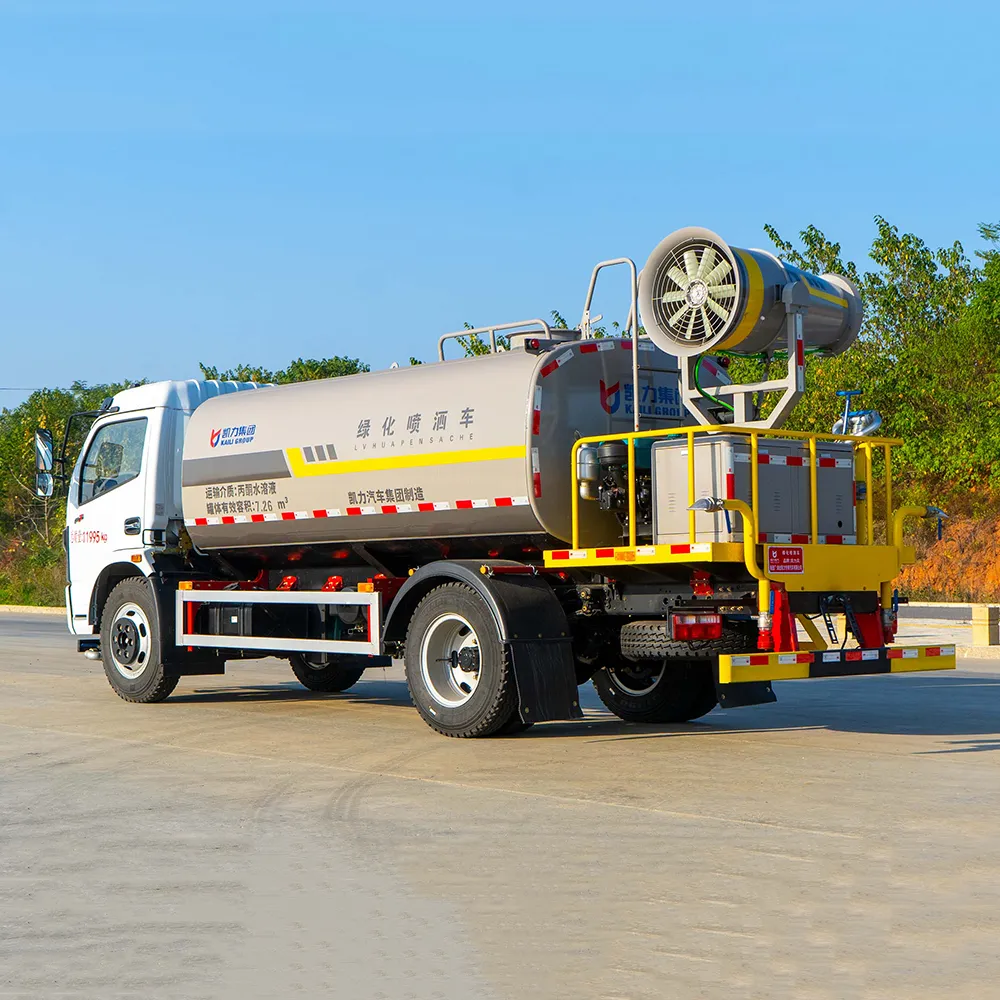
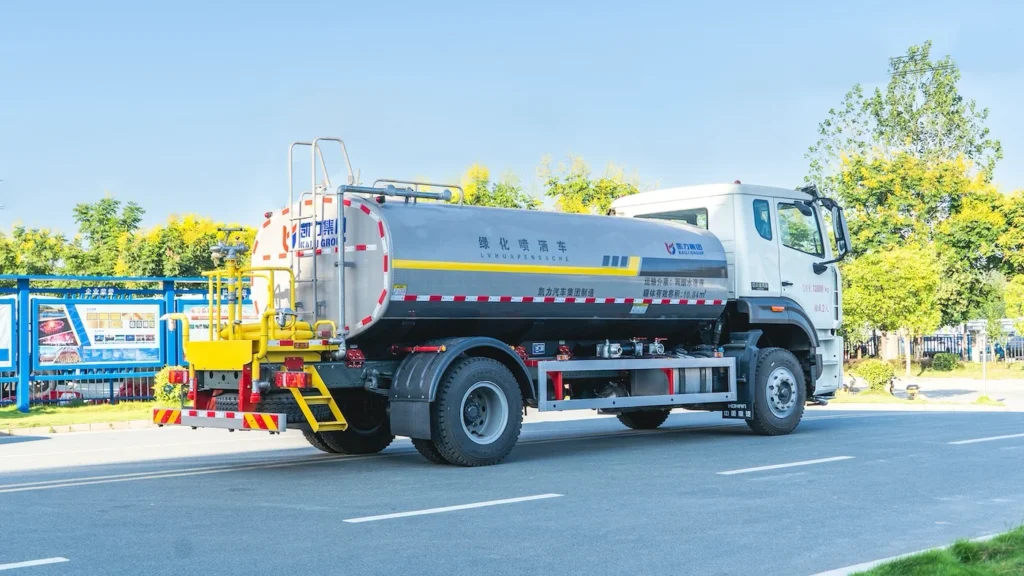
A water truck is made up of several key systems. Each system has a different role in water transport, pumping, spraying, and vehicle operation.
A water truck is made up of several key systems. Each system has a different role in water transport, pumping, spraying, and vehicle operation.
Understanding these water truck parts can help operators use the truck correctly. It can also help buyers choose the right configuration for road washing, dust control, landscaping, and other applications.
1. Water Truck Chassis and Water Tank
The chassis and water tank provide driving power, load capacity, and water storage.
Truck Chassis
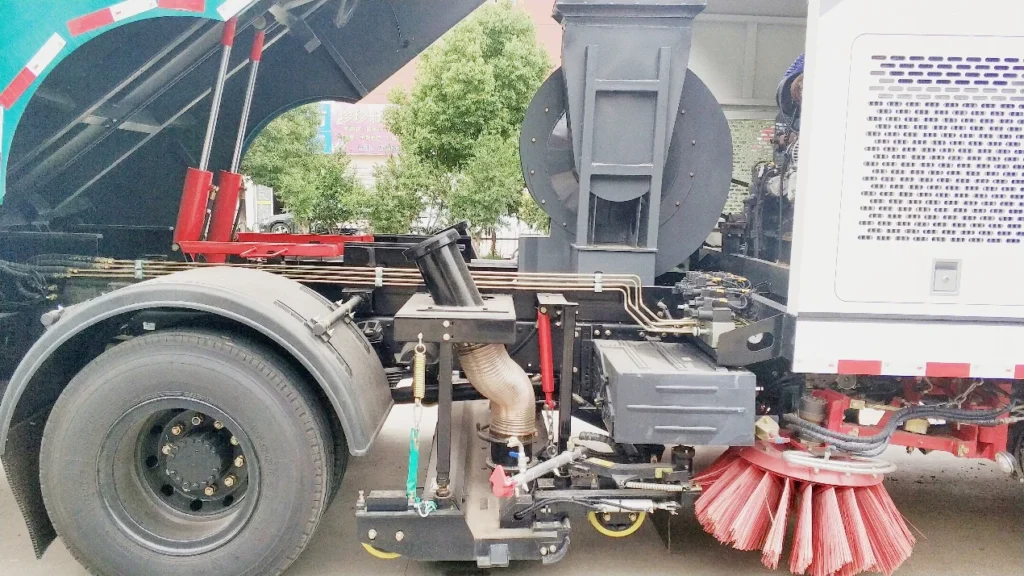
The truck chassis is the main frame and power source of the water truck.
It supports the water tank, pump, piping system, and other equipment. It also provides the power needed to move the vehicle and operate the water system.
Different chassis can be selected based on:
- Tank capacity
- Payload
- Road conditions
- Working environment
- Local vehicle regulations
Smaller water trucks often use a lighter chassis. Larger water trucks may use heavy-duty 6×4 or other multi-axle chassis to carry more water.
Water Tank
The water tank stores water or other approved liquid solutions.
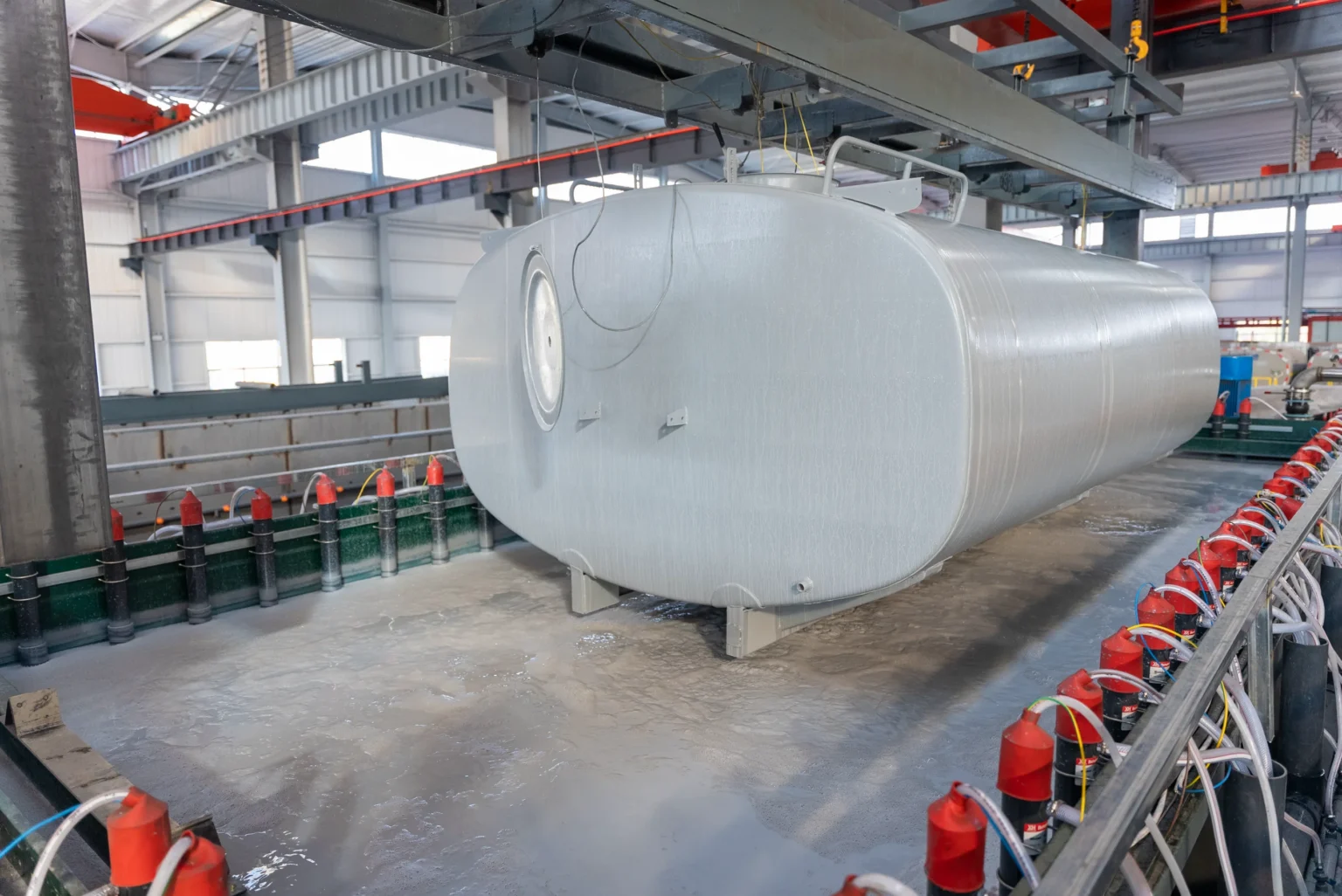
Most water truck tanks are made from welded steel plates. Common tank shapes include elliptical and rounded rectangular designs.
These shapes help improve tank strength and vehicle stability.
Inside the tank, transverse baffles help reduce water movement while the truck is driving.
When a truck starts, stops, or turns, the water inside the tank moves. This movement is known as liquid surge.
Baffles reduce this movement and help improve vehicle stability.
Large water tanks may also be divided into two or three internal compartments. Openings at the bottom of the partitions allow water to move between the compartments while reducing sudden water surge.
The top of the tank normally has a manway for inspection, cleaning, and maintenance. On many water trucks, the manway is about 450 mm or larger to provide enough access for maintenance work.
2. Water Pumping and Delivery System
The pumping and delivery system moves water from the tank to the spray equipment.
Its main parts include the PTO, water pump, pipes, hoses, and valves.
Power Take-Off (PTO)
The power take-off, or PTO, transfers power from the truck’s engine or transmission to the water pump.
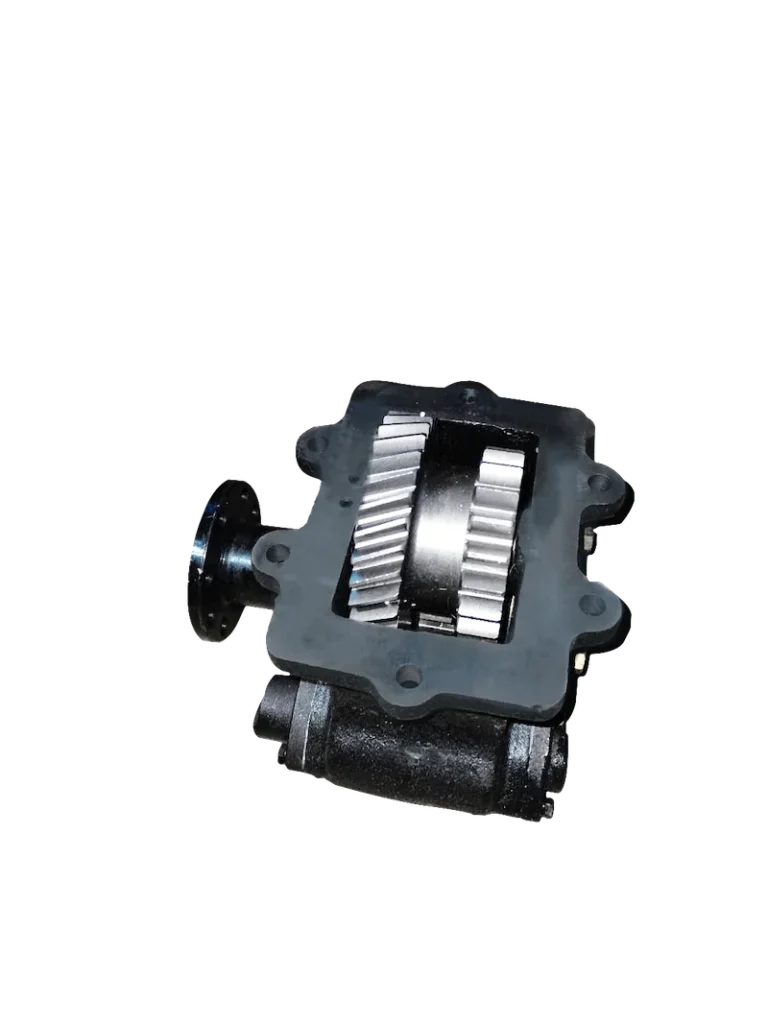
It is normally connected to the transmission.
When the PTO is engaged, engine power is transferred through the driveline to operate the pump.
The PTO is an important link between the truck chassis and the water spraying system.
Without it, a PTO-driven water pump cannot operate.
Water Pump
Most water trucks use a self-priming centrifugal water pump.
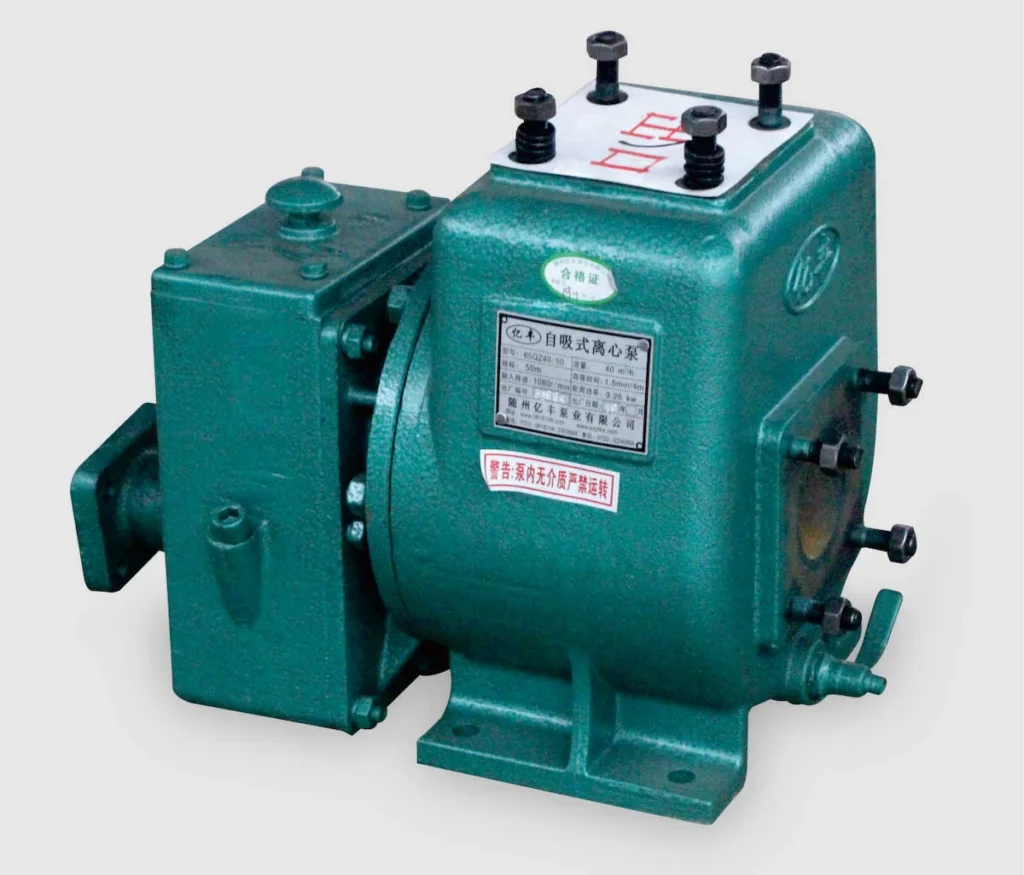
The pump has two main jobs:
- Draw water into the tank when using the self-loading function.
- Pressurize water and send it to the spray system.
The pump must be properly primed before operation.
The suction system must also remain airtight. Air leaks in the suction hose or fittings can prevent the pump from drawing water correctly.
For some pump installations, the suction pipe and outlet pipe must follow specific installation requirements to keep water flow stable.
For example, the pump inlet should be installed in a way that helps keep water inside the pump chamber.
The outlet should also have enough straight pipe before a bend when required by the pump manufacturer.
The exact installation requirements should always follow the pump manufacturer’s instructions.
Pipes and Valves
The water delivery system includes:
- Steel pipes
- Flexible hoses
- Flanges
- Quick couplings
- Filters
- Pipe fittings
- Control valves
These parts create a complete water flow system between the tank, pump, and spray equipment.
Valves control the direction and flow of water.
Common valve types may include:
- Pneumatic ball valves
- Solenoid valves
- Two-way ball valves
- Multi-way control valves
By opening or closing different valves, the operator can switch between different functions such as:
- Front spraying
- Rear spraying
- Side spraying
- Water cannon operation
- Hose operation
3. Water Spraying and Control System
The spray system performs the actual water distribution work.
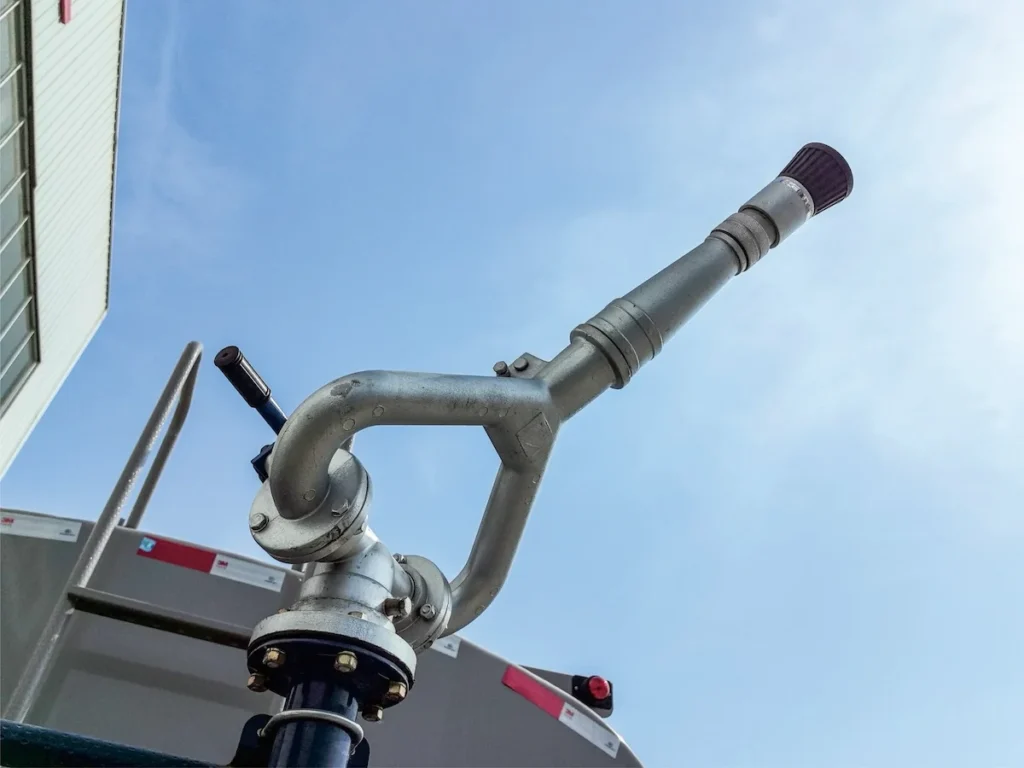
Different spray devices are installed in different positions on the truck. Each one is designed for a specific application.
Front Spray
The front spray heads are normally installed at the lower front section of the vehicle.

They provide a wide spray pattern.
Front spray is commonly used for:
- Road washing
- Street cleaning
- Dust control
- Surface cooling
The spray direction and angle can be adjusted on some water trucks.
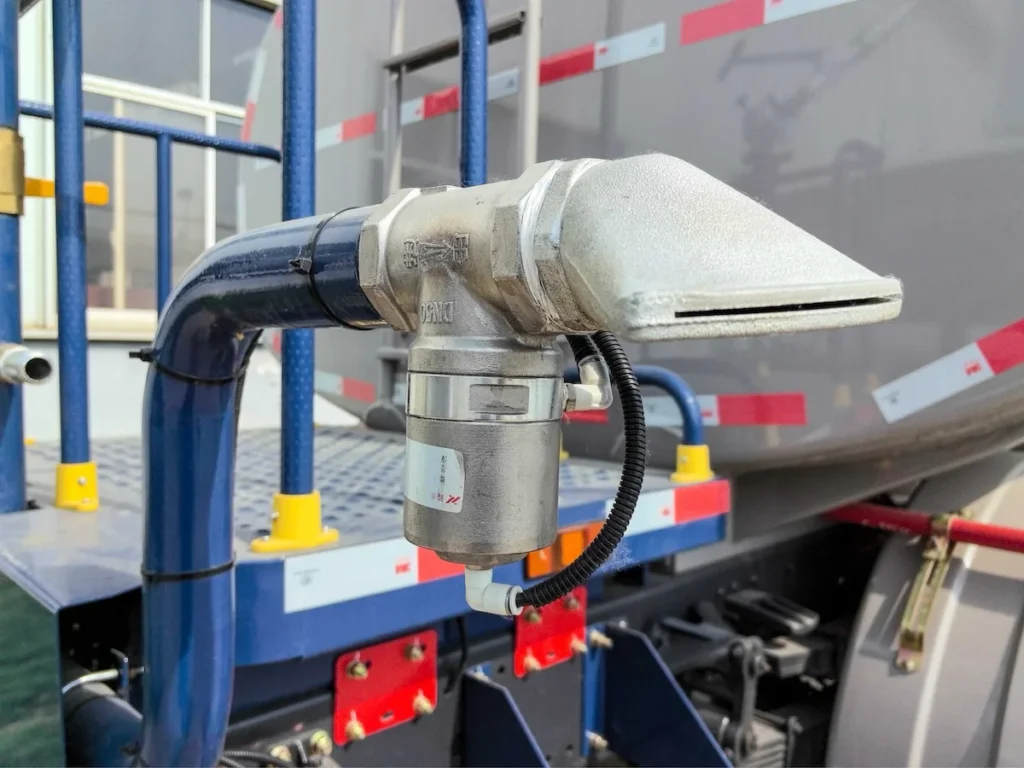
Rear Spray
The rear spray heads are normally installed behind or underneath the water tank.
They can use duckbill-style or other wide-angle spray nozzles.
Rear spray is mainly used for:
- Dust suppression
- Road wetting
- Construction site dust control
- Unpaved road maintenance
The wide spray area allows the truck to cover a larger road surface while driving.
Side Spray
Side spray heads are installed on one or both sides of the water truck.
They are useful when water needs to be directed toward the roadside.
Common applications include:
- Landscaping irrigation
- Roadside vegetation
- Green belts
- Trees and plants
- Road shoulder cleaning
Water Cannon
A water cannon is normally installed on the rear working platform.
It can spray water over a longer distance than standard spray heads.
Many water cannons can switch between a straight water stream and a wider spray pattern.
They are commonly used for:
- Long-distance irrigation
- Large-area dust control
- Landscaping
- Site cleaning
- Emergency water support
The operator can normally adjust the direction and spray angle.
Water Truck Control System
The control system allows the operator to manage the spraying equipment.
A typical water truck may have:
- PTO control switch
- In-cab spray controls
- Pneumatic or electric valve controls
- Manual water cannon controls
- Pump controls
Modern water trucks often allow the driver to control the front, rear, and side spray heads directly from the cab.
The dashboard also provides important vehicle information, including:
- Engine coolant temperature
- Oil pressure
- Engine speed
- Warning indicators
How to Operate a Water Truck
Correct operation can improve working efficiency and reduce equipment damage.
Operators should always follow the truck manufacturer’s operating manual and local safety requirements.
1. Pre-Operation Inspection
Before starting work, inspect the complete water truck.
Check:
- Brakes
- Tires
- Water tank
- Water pump
- Pipes
- Valves
- Spray nozzles
- Suction hose
- PTO
- Dashboard indicators
Make sure there are no visible water leaks.
Check the spray nozzles for blockages.
Make sure the suction hose and all connections are secure.
Walk around the vehicle and remove any nearby obstacles.
Operators should also wear the required protective clothing and high-visibility safety clothing.
2. Water Truck Operation
Start the engine and allow it to reach normal working condition.
When drawing water, park the truck on stable and level ground whenever possible.
Close the discharge valves before starting the suction process.
For a manual-transmission truck, a common PTO operating sequence is:
- Press the clutch pedal.
- Engage the PTO.
- Release the clutch slowly.
- Increase engine speed to the required RPM.
- Open the required spray valve.
The exact sequence can vary depending on the chassis, transmission, PTO, and pump system.
Always follow the vehicle manufacturer’s operating instructions.
During spraying, turn on the required warning lights.
Drive at a steady, low speed where required.
When adjusting spray direction, make sure there are no people or vehicles in the spray path.
High-pressure water can cause injury or property damage.
3. After Operation
After spraying is complete:
- Close the spray valves.
- Disengage the PTO.
- Stop the vehicle safely.
- Shut down the engine when required.
The exact shutdown process should follow the manufacturer’s instructions.
Cold Weather Operation
Cold weather requires extra care.
When the temperature drops below 0°C (32°F), drain water from:
- Water tank
- Pump
- Pipes
- Valves
- Spray heads
- Hoses
Water left inside the system can freeze.
Frozen water expands and can damage the pump, pipes, valves, and fittings.
Clean water should also be used whenever possible. Dirty water can block filters and spray nozzles.
Water Truck Maintenance Guide
Regular maintenance helps keep the water truck reliable and reduces downtime.
Water System Maintenance
Inspect all water pipes, valves, fittings, and suction hoses regularly.
Look for:
- Water leaks
- Loose fittings
- Damaged seals
- Cracked hoses
- Blocked filters
Repair leaks as soon as possible.
Replace worn seals or damaged hoses when necessary.
Fasteners and Lubrication
Check the mounting points between the:
- Water tank
- Pump frame
- Subframe
- Truck chassis
Make sure bolts and nuts are secure.
The driveline, universal joints, and other lubrication points should also be greased according to the manufacturer’s maintenance schedule.
Regular lubrication helps reduce wear and keeps the driveline working smoothly.
Water Pump Maintenance
Check the water pump regularly.
Watch for:
- Water leaks
- Oil leaks
- Unusual noise
- Reduced water pressure
- Poor suction performance
Check the pump lubricant level according to the pump manufacturer’s instructions.
Lubricant replacement intervals depend on the pump model and working conditions.
For some systems, pump oil may need to be replaced after around 200 operating hours.
Always use the maintenance interval specified by the pump manufacturer.
Regular Service Intervals
Water truck maintenance intervals depend on:
- Truck model
- Chassis
- Working conditions
- Daily operating hours
- Mileage
Smaller water trucks may require general maintenance around every 5,000 km or six months under some operating conditions.
Larger trucks may follow different service intervals based on the chassis manufacturer’s recommendations.
New trucks should also receive their first scheduled inspection according to the chassis and body manufacturer’s service plan.
The engine, transmission, axles, brakes, and other chassis parts should always follow the chassis manufacturer’s maintenance schedule.
Water system parts may require more frequent checks, especially when the truck operates every day.
Water Truck vs. Landscaping Spray Truck vs. Dust Suppression Truck
KAILION offers three types of water spraying vehicles.
They have some similar functions, but their spray systems and body structures are designed for different applications.
Water Truck
A water truck is the most common and basic model.
It normally includes:
- Front spray
- Rear spray
- Side spray
- Water cannon
This makes the vehicle suitable for several jobs.
Common applications include:
- Road washing
- Dust suppression
- Street cleaning
- Landscaping irrigation
- Construction sites
The rear working platform is normally compact. It usually provides enough space for an operator to control the water cannon.
A standard water truck is a good choice when the main jobs are road washing, road wetting, and basic irrigation.
Landscaping Spray Truck
A landscaping spray truck is similar to a standard water truck, but it has a larger rear working platform.
The platform can support additional spraying equipment.
Depending on the configuration, a 30- to 50-meter fog cannon or long-range spraying system can be installed.
The truck keeps the main functions of a standard water truck, including:
- Front spray
- Rear spray
- Side spray
- Water cannon
It can also provide stronger long-range spraying performance.
This makes it suitable for:
- Landscaping
- Green belt maintenance
- Plant spraying
- Large-area irrigation
- Construction site dust control
It is a better choice when standard road spraying and long-range spraying are both required.
Multi-Function Dust Suppression Truck
A multi-function dust suppression truck is mainly designed for heavy dust control.
Its main feature is a high-pressure misting system.
The system turns water or an approved dust-control solution into very fine droplets.
These micron-sized droplets can mix with airborne dust particles and help bring them to the ground.
[img]
The vehicle often has a larger rear equipment platform.
A long-range fog cannon with a spray range of 60 meters or more can be installed, depending on the model.
Multi-function dust suppression trucks are mainly used in places with high dust levels, such as:
- Construction sites
- Coal yards
- Mines
- Ports
- Material storage areas
- Industrial sites
Compared with a standard water truck, the main goal of this vehicle is not road washing.
Its main job is airborne dust suppression.
Which Type of Water Truck Should You Choose?
The right vehicle depends on your main application.
Choose a standard water truck if your main work includes:
- Road washing
- Street cleaning
- Road wetting
- Basic dust control
- Landscaping irrigation
Choose a landscaping spray truck if you need:
- Standard water truck functions
- Landscaping
- Plant spraying
- Longer spray distance
- Additional fog cannon equipment
Choose a multi-function dust suppression truck if your main goal is:
- Heavy dust suppression
- Airborne dust control
- Mining dust control
- Coal yard dust control
- Port dust control
- Large construction site dust control
In simple terms, the choice depends on whether your main job is basic washing and irrigation, long-range landscaping spray, or professional dust suppression.
Have questions about a KAILI vehicle?
Contact the KAILI commercial vehicle team today.
Related Articles
View All Articles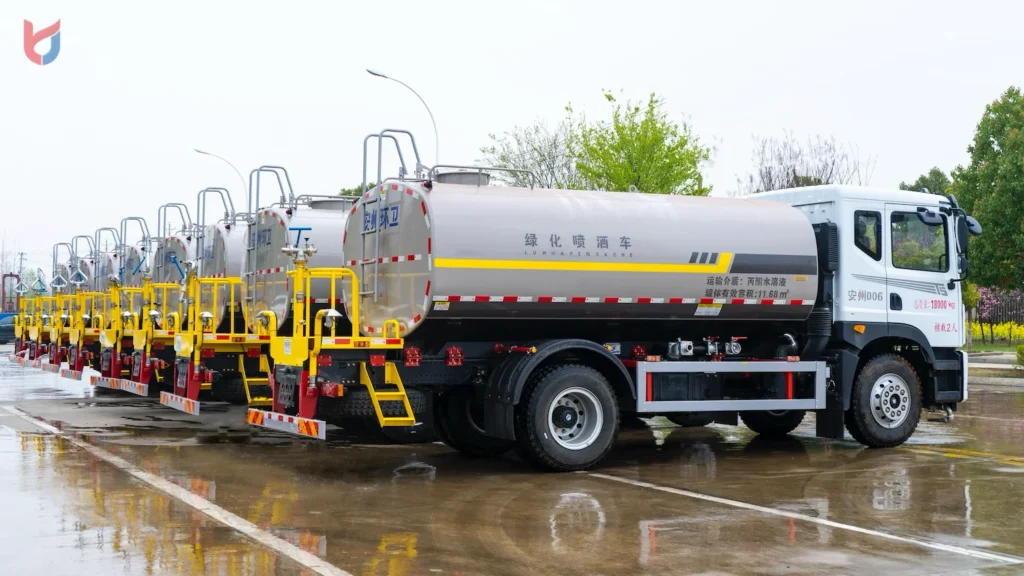
5 Key Factors to Check Before Buying a Water Truck
A water truck is a common vehicle used for road cleaning, dust control, landscaping, and municipal sanitation work. Buying the right water truck requires careful comparison of both technical specifications and commercial terms.

Understanding the Mechanics of Dust Cannons
A dust cannon uses fine water mist to control airborne dust. The water droplets mix with dust particles, making them heavier so they settle to the ground.
What are the applications of a water truck?
Water trucks serve city cleaning teams, landscape crews, and construction sites. They carry water in a tank and use a pump, pipes, and spray nozzles to deliver it where needed.