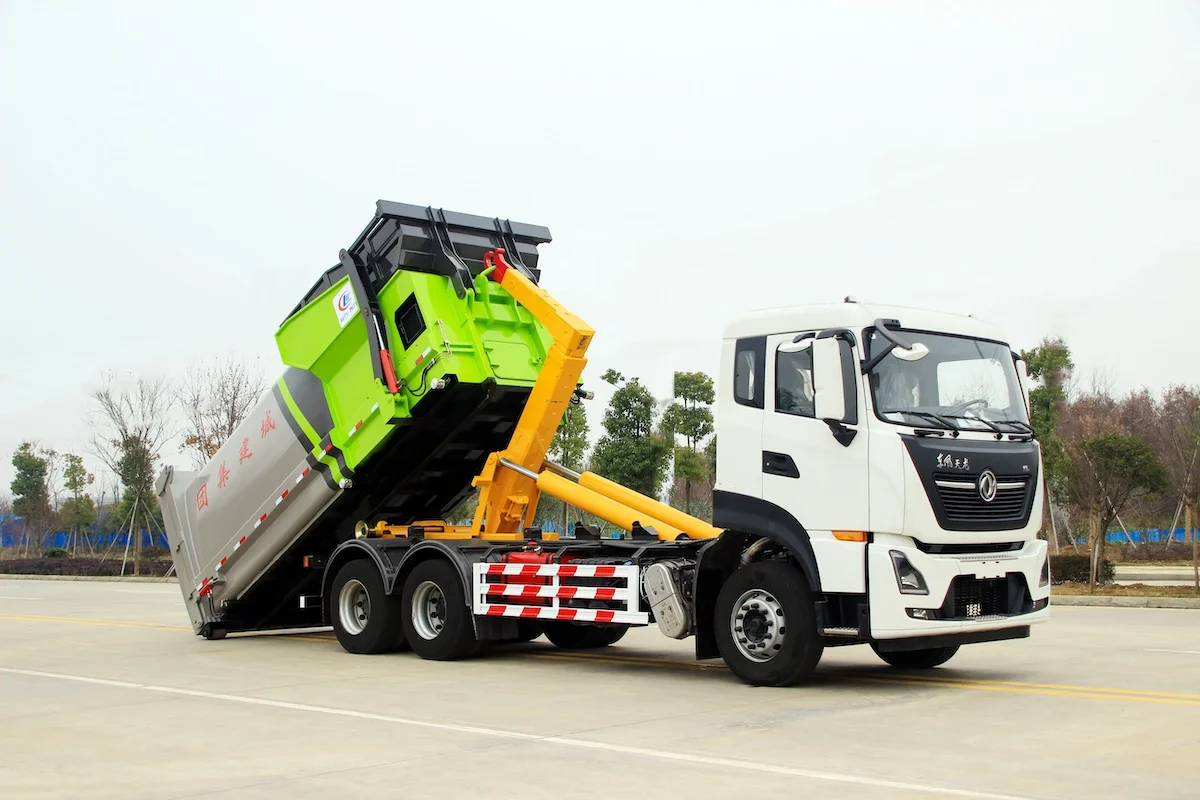
A roll-off truck separates the truck from the container, so one truck can serve multiple locations. The truck delivers a roll-off box, leaves it in place for loading, and returns when it is full or when the customer needs a swap. That simple workflow helps crews keep working while the hauling company manages transport on a schedule that fits the project.
A roll-off truck separates the truck from the container, so one truck can serve multiple locations. The truck delivers a roll-off box, leaves it in place for loading, and returns when it is full or when the customer needs a swap. That simple workflow helps crews keep working while the hauling company manages transport on a schedule that fits the project.
What makes a roll-off truck useful for hauling work?
The biggest advantage is efficiency. A job site can have one roll-off box for debris , recyclable material, and another dumpster for industrial waste. The truck does not need to sit idle while workers load it by hand. Instead, the container becomes a temporary storage point, and the vehicle stays available for other pickups.
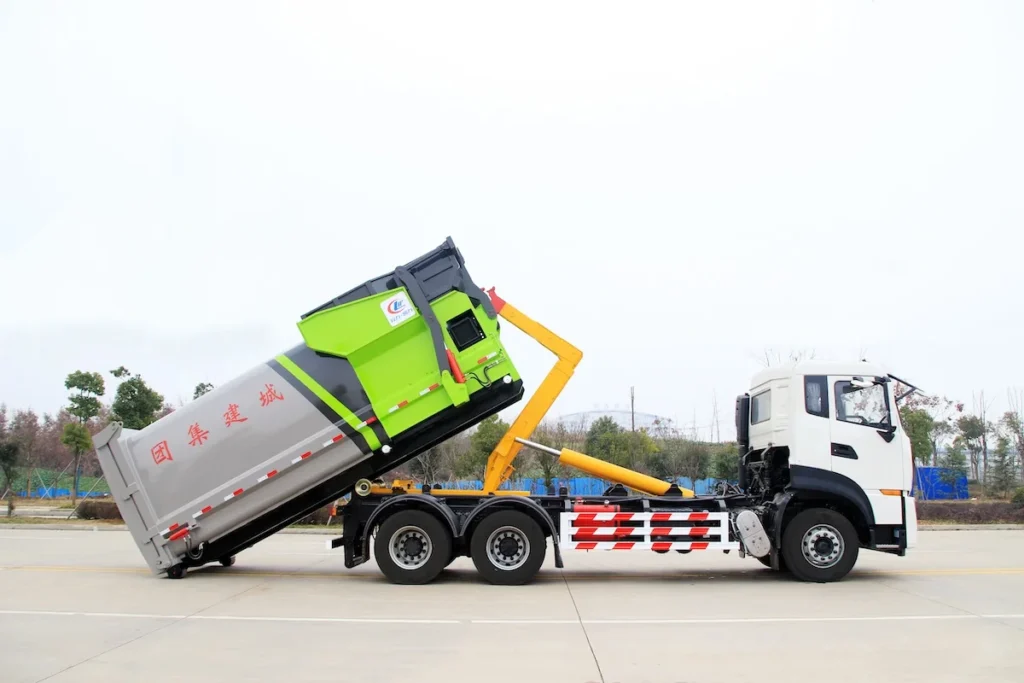
This is why many hauling companies choose a roll-off dumpster truck instead of a standard dump truck for recurring waste and material hauling.
A dump truck works well for loose materials that workers load, transport, and unload quickly. A roll-off system is often a better choice when waste needs to stay on-site and build up over several days.
It also gives customers more flexibility. The roll-off box can sit close to the work area. It can go in a driveway, behind a building, or near an active demolition site.
The core advantages of roll off trucks
Roll-off trucks are popular because they solve several hauling problems at the same time. They provide high capacity, flexible container placement, better job site organization, and faster waste handling. A roll-off truck is more than a waste vehicle. It is also a practical system for moving and managing materials.
Key advantages include:
- Flexible container placement: Containers can be placed close to the work area, which reduces extra handling and keeps debris near the source.
- Better truck utilization: One roll-off truck can serve several containers instead of staying with one load until it is full.
- Cleaner job sites: Open-top containers give crews a clear place to load debris, helping reduce piles of waste around the site.
- Better material sorting: Separate containers can be used for wood, concrete, metal, roofing waste, landfill waste, and recyclable materials.
- Easy to scale: A waste hauler can add more containers to serve more customers without adding another truck at the same rate.
- Less manual handling: Crews can load debris directly into the container, which reduces double-handling and unnecessary labor.
These benefits are useful in many real-world operations. A demolition contractor can separate waste from reusable materials. A roofing crew can load shingles directly into a roll-off box. A municipality can place several containers during storm cleanup.
In each case, a roll-off dumpster truck helps crews keep the site organized while work continues. It also makes waste collection, material sorting, and container pickup easier to manage.
Choosing the Right Roll-Off Truck and Container Setup
Before looking for a roll-off truck for sale, make sure the truck, hoist system, and container setup match your actual work needs.
Consider the following factors:
- Container size and weight: Match the hoist capacity, chassis, and axle rating to the type and weight of materials you expect to haul.
- Route conditions: Urban streets, residential driveways, rural roads, and demolition sites all have different requirements for turning radius, access, and setup space.
- Loading frequency: High-volume routes may benefit from a system that allows faster container loading, unloading, and pickup.
- Driver workflow: Consider how often the driver needs to leave the cab, connect the container, inspect the load, or reposition the truck.
- Body flexibility: If the same chassis may need to carry roll-off containers, flatbeds, storage bodies, or other equipment, a more flexible hoist system may be a better choice.
- Service and parts support: Parts availability, local technicians, warranty coverage, and dealer support can all affect truck uptime and long-term operating costs.
Before purchasing a roll-off truck, inspect the hoist system carefully. Check the hydraulic system, frame, rails, locking points, and control system. Also confirm that the truck is rated for the container sizes, payloads, and materials you plan to handle.
Choosing the right setup from the start can improve safety, reduce downtime, and make daily container handling more efficient.
Conclusion
A roll-off dumpster truck helps hauling companies move large amounts of material with less disruption to daily work.
For companies handling construction debris, demolition waste, recyclable materials, cleanup projects, or regular dumpster service, roll-off trucks provide more than transportation. They help crews manage containers, organize waste, and keep material moving through a clear and repeatable process.
With the right truck and box setup, businesses can improve hauling efficiency, reduce unnecessary handling, and keep job sites cleaner and easier to manage.
Have questions about a roll-off truck?