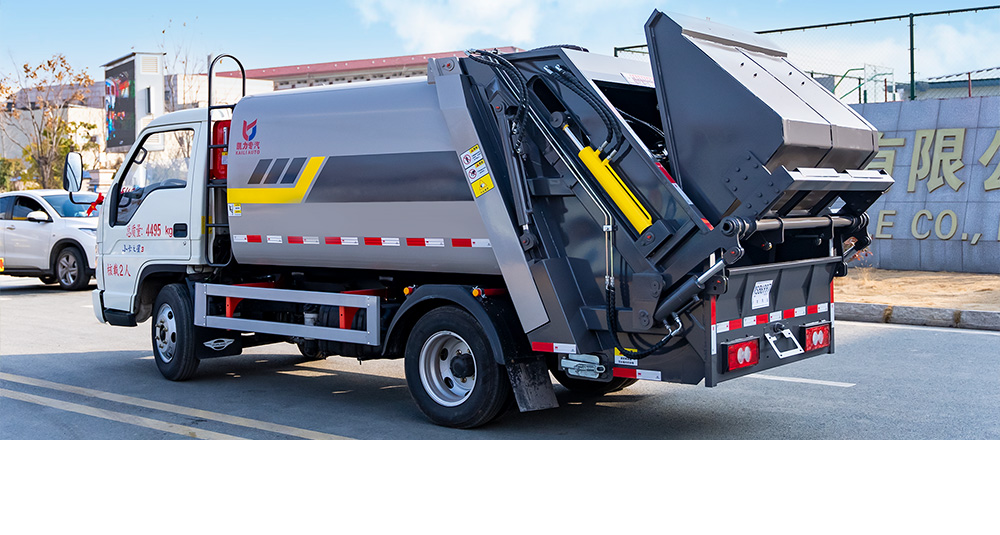
A rear loader garbage truck is a sanitation vehicle that loads waste from the rear of the truck. It uses a compaction system that compresses loose waste before transport.
A rear loader garbage truck is a sanitation vehicle that loads waste from the rear of the truck. It uses a compaction system that compresses loose waste before transport.
Residential communities, city streets, and professional waste collection companies commonly use this type of truck.
Cost Benefits
Higher Collection Efficiency
A rear loader garbage truck uses an onboard garbage compactor system to compress waste. This reduces the volume of loose material and allows the truck to carry more waste in each load.
Higher load capacity helps reduce the number of trips to transfer stations or disposal sites. Fewer trips can also reduce fuel use, driver hours, and vehicle wear.
Lower Labor Requirements
Loading, compaction, and unloading can be controlled by the driver through an electric control system or remote control.
This reduces the need for several workers to operate the truck at the same time.
For long-term waste collection operations, this can help reduce labor costs.
Better Fuel Control
During operation, the control system can adjust engine speed based on the actual working load.
This helps reduce unnecessary idling and power output, which can lower fuel consumption during collection work.
Lower Operating Costs for Electric Models

A rear loader garbage truck with an electric chassis produces zero tailpipe emissions and uses less energy during operation.
The operating noise can stay below 70 dB. This makes the vehicle a better choice for residential areas. It also helps with collection work early in the morning or in the evening.
This can improve vehicle utilization in areas with stricter noise requirements.
How Does a Rear Loader Garbage Truck Work?
1. Waste Is Loaded from the Rear
The rear of the truck is equipped with a bin lifting mechanism.
It can automatically lift 120 L, 480L or 660L garbage bins and empty the garbage into the rear hopper.
This reduces the need for manual lifting.
Our rear loader garbage trucks are available with four rear-loading configurations:
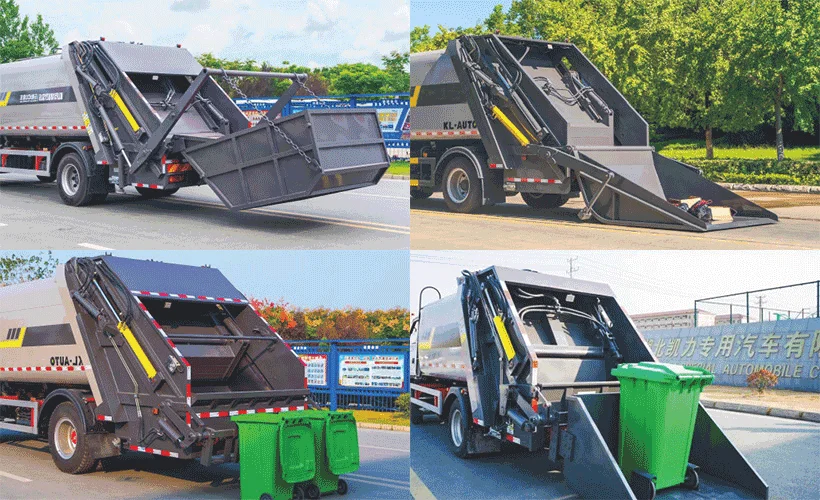
- Flip-Plate Lifter
- Triangular Hopper
- Swing-Arm System
- Large Ground-Level Hopper
Each configuration is designed for different collection routes, container types, and loading needs, giving operators greater flexibility in daily waste collection.
2. The Hydraulic System Compacts the Waste
The engine powers a hydraulic pump.
The hydraulic system drives the slide plate and packer blade, which push the waste into the body and compress it.
After compaction, the waste occupies less space, allowing the truck to carry more material in one trip.
3. Wastewater Is Collected Inside the Truck
The body uses a sealed welded structure.
Wastewater produced during compaction flows into a dedicated wastewater tank.
You can then discharge it at the treatment site instead of letting it leak onto the road during transport.
This also helps reduce odor and liquid leakage.
4. Waste Is Unloaded
When the rear loader garbage truck reaches the disposal site, an ejector plate pushes the compacted waste out through the rear of the body.
The unloading process works together with the hydraulic locking system to improve operating safety.
What Should You Check When Buying a Rear Loader Garbage Truck?
Garbage Compactor Efficiency and Sealing
When purchasing a rear loader garbage truck, inspect the body welds and hydraulic lines carefully.
The compaction system and sealing performance are also important.
Good compaction can reduce the number of transport trips.
Poor sealing around the body, tailgate, or wastewater tank may lead to liquid leakage.
The rated payload should also match the actual density of the collected waste.
If the payload is too low, overloading may occur.
If the truck has an oversized body, it may waste capacity.
Long-term overloading can also increase wear on the suspension and tires and raise maintenance costs.
After-Sales Service and Parts Support
Based on our experience, many common rear loader garbage truck problems relate to the hydraulic system. They also involve hydraulic cylinders and seals.
Before purchasing, ask about the supplier’s after-sales policy and spare parts support.
For trucks that operate every day, keeping common wear parts in stock can also help reduce downtime when you need repairs.
Need a Rear Loader Garbage Truck ?
Tell us about your waste collection requirements, and we’ll help match the truck to your operation.
Conclusion
Rear loader garbage trucks are an important part of modern waste management systems. They combine efficient loading, waste compaction, and sealed transport in one vehicle.
For residential communities, city streets, and commercial waste collection, rear loader garbage trucks can simplify the collection process, reduce labor requirements, and cut the number of trips to transfer or disposal sites. This can help lower long-term operating costs.
As urban sanitation standards continue to improve, rear loader garbage trucks will remain important for improving waste collection efficiency, keeping streets and communities clean, reducing secondary pollution, and supporting better urban environmental management.