Choosing a Mobile Trash Compactor: What Buyers Should Know

This guide explains the benefits and applications of mobile waste compactors. This will help you choose the right waste management compactor for your waste collection and transport needs.
A mobile Trash compactor can efficiently collect different types of waste, including household waste from residential areas and commercial waste. It provides a fast and practical way to collect, compress, and store waste.
This guide explains the benefits and applications of mobile waste compactors. This will help you choose the right waste management compactor for your waste collection and transport needs.
How Does a Mobile Waste Compactor Work?
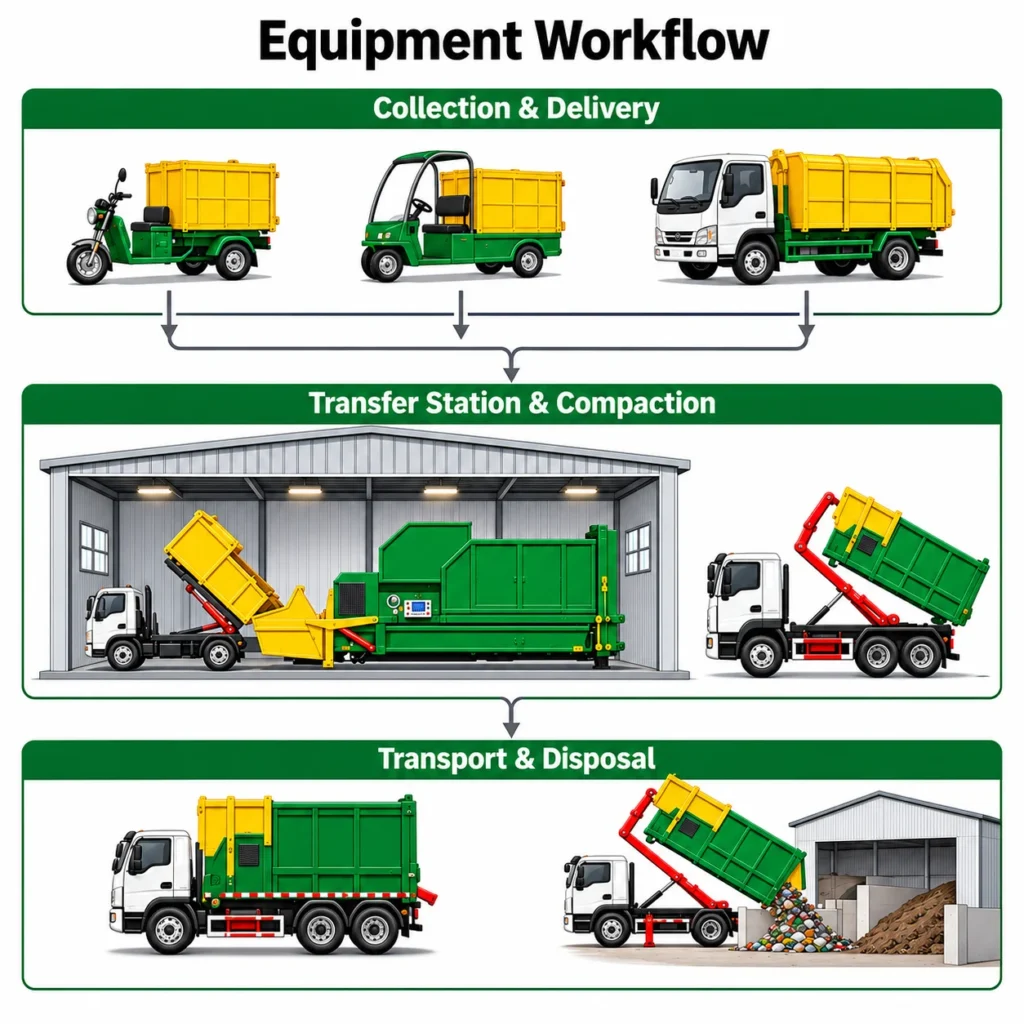
A tipping hopper or bin lifting system loads waste into the compactor. An internal hydraulic ram pushes the loose waste forward and compresses it horizontally.
The compressed waste is then stored inside the container. Once the container is full, a hook-lift truck transports it to a waste treatment or disposal facility. The empty container is returned for continued use.
Advantages of Mobile Trash Compactors
Easy Installation
A mobile trash compactor does not require a permanent building or foundation. The initial investment is only about one-third to one-half of the cost of a traditional waste transfer station.
It can also be put into operation quickly. This makes it suitable for crowded city centers where land is limited, as well as temporary projects.
High Flexibility
Mobile trash compactors are usually equipped with wheels or towing systems for easy transport.
They can be moved between different locations based on waste volume and collection needs. Unlike fixed waste transfer stations, they are not limited to one location.
This flexibility allows one unit to serve multiple areas, collect waste on time, and prevent waste buildup.
Better Space Efficiency
A mobile hydraulic trash compactor uses an automatic hydraulic system to compress waste after loading.
The system can reduce waste volume to about one-third to one-fifth of its original size. This greatly increases the amount of waste transported per trip.
For example, a site that handles 20 tons of waste per day may need 8–10 trips using traditional temporary collection points. With a mobile waste compactor, this can be reduced to around 3–4 trips.
Fewer trips mean lower fuel use, reduced carbon emissions, and lower labor costs. These savings can make the equipment more cost-effective over time.
Environmentally Friendly Design
A sealed container and an effective compaction system are key to cleaner waste handling.
Once waste enters the unit, it is compressed and stored inside an enclosed container. This helps prevent waste from spilling. An optional odor control system can also help reduce unpleasant smells.
During transport, the sealed container helps prevent liquid leaks and road pollution. It also reduces problems caused by flies and other pests.
Electric or low-noise hydraulic systems can keep operating noise at 65 dB or below. This makes the equipment suitable for densely populated areas and locations with strict environmental requirements.
High Level of Automation
A self contained trash compactor combines waste compression and storage in one unit.
The system handles waste from compression and storage to discharge. Collection workers do not need to come into direct contact with the waste.
This makes daily operation cleaner, easier, and less physically demanding.
Smart Management
Some models support real-time monitoring of waste levels, compression status, and equipment location.
Advanced models may also include GPS tracking and IoT connectivity for easier fleet and equipment management.
Applications of Mobile Trash Compactors
Temporary and Emergency Waste Collection
Mobile trash compactors are suitable for tourist attractions during holidays, large exhibitions, sports events, and other temporary activities.
These locations often produce large amounts of waste within a short period.
For such applications, a small mobile waste compactor with a daily processing capacity of 5–10 tons is recommended.
Its compact size makes it easy to transport and deploy at several locations. Waste can be compressed and transported as needed to prevent buildup.
Temporary Waste Management During Construction or Renovation
Mobile waste compactors are also useful at construction sites or in areas where existing waste transfer stations have been removed or are being renovated.
A medium-sized unit with a daily processing capacity of 10–20 tons is recommended.
It can support regular household waste collection during the project. With a wear-resistant container, it may also handle suitable construction waste on a temporary basis.
Key Considerations When Buying a Mobile Trash Compactor
Choosing the right mobile waste compactor depends on your actual needs. There is no need to pay for advanced features that your project does not require.
Consider your application, budget, and long-term operating plans before making a decision.
For limited budgets or temporary use: Choose a basic, small-sized unit. Focus on reliable operation and effective container sealing.
For locations with stable waste volumes: Choose a medium-sized unit. Consider additional environmental protection and energy-saving features to improve long-term efficiency.
Conclusion
A mobile waste compactor offers a flexible and efficient solution for waste collection, compression, and transport. It helps reduce waste volume, save space, and lower transport costs.
When choosing a waste management compactor, consider your daily waste volume, available space, budget, and transport needs. The right equipment should meet your current needs while supporting long-term waste management.
Looking for the Right Mobile Waste Compactor?